

Alexander Galyatsky
art space
"Boundless Journeys" is a philosophical anthology of the path — a systematic exploration of what it means for a person to venture beyond the familiar, the known, the safe, and to set out toward the unknown.
The series examines the philosophy of travel as a multidimensional phenomenon: from its geographical and scientific dimensions, through the psychological realm of the inner journey, to the metaphysical problematics of time, boundaries, and the very meaning of movement.
Boundless journeys begin where certainty about boundaries ends. We are accustomed to thinking of the world as a map: there are continents, lines, coordinates, limits. But every map is merely a convenient illusion. It simplifies reality to make it comprehensible, yet at the same time conceals its infinity. A journey, on the other hand, is the moment when the map ceases to coincide with the world.
Humans have always striven toward boundaries — and toward their transcendence. From the first steps beyond the boundaries of one's tribe to ocean expeditions, from ascending into the sky to delving into the microcosm — it is the same movement: to go beyond the given. But each time, upon reaching the edge, one discovers not an end, but a continuation. The horizon recedes. And in this recession lies the mystery of boundlessness.
Philosophy has long sought to grasp this strange nature of the world. Immanuel Kant spoke of space and time as forms of our perception, not as properties of "things in themselves." This means that the boundaries we see may not be boundaries of the world, but boundaries of our way of perceiving it. Boundlessness, then, is not a characteristic of the external, but a possibility within.
Yet perhaps the most important thing about boundless journeys is not space, but a state of being. It is the readiness to keep going, even without knowing where the path leads. It is the acceptance that there may be no final destination. It is the consent to live in openness.
Paradoxically, it is precisely in this consent that a person finds stability. Not in a fixed point, but in movement. Not in a boundary, but in its transcendence. Not in completion, but in the process.
A boundless journey is not a path to a destination. It is a form of existence. It is a way of being in a world that is always larger than any of our representations of it.

canvas, acrylic, 80x80 cm

canvas, acrylic, 60x80 cm

canvas, acrylic, 60x80 cm

canvas, acrylic, 60x80 cm
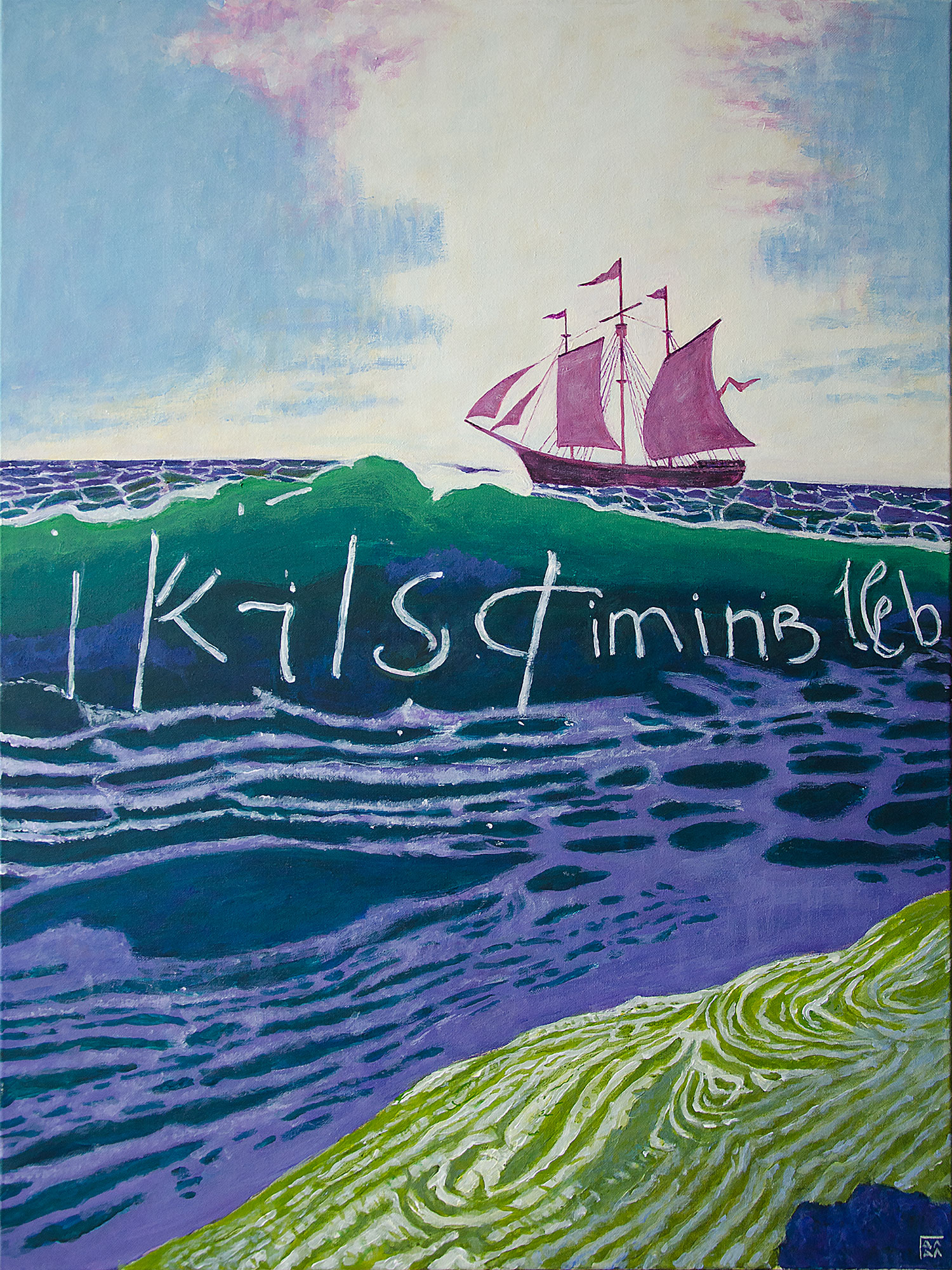
canvas, acrylic, 60x80 cm

canvas, acrylic, 90x90 cm

© 2026 ArtSpace. Все права защищены.

